Pacific Coast Highway
We continue the series An Ode to Pacific Coasting in Central California with a journey from Lompoc to Monterey, Central Coast, California. This series is a collection of articles about travelling the Pacific Coast and a sort of review of Danielle Kroll’s book, Pacific Coasting. Author of travel books such as East Coasting, Danielle writes and illustrates from her own experience. In California (Part 1), we started with Southern California.
In this article: Lompoc | Five Cities | Things to do in SLO | Big Sur | Carmel-by-the-Sea | Pacific Grove | 17-Mile Drive | Monterey | Capitola | Santa Cruz
Central Coast
In Danielle Kroll’s book and for many people, California is divided into two – NorCal and SoCal. The geographical middle is north of Fresno, at 37°09′58″N 119°26′58″W.
People of the Central Coast disagree.
What and where is Central Coast? Many Central Coasters will tell you, “it’s not LA and it’s not San Francisco.” I think that’s a sign at one of the Pismo Beach restaurants.
It’s like when Canadians tell you, “we’re not Americans.” You get it; still, what does that mean?
Central Coast is the home – second home, vacation home, retirement home – of people from LA and San Francisco. It is also where for decades farmers from the Central Valley have found refuge from the relentless summer heat. Some of our neighbours on our street here in Central Coast are farmers and retired farmers.
This part of California consists of SLO, Monterey, and Santa Cruz counties and there are some seriously stunning landscapes. Most people probably just know Big Sur, which is, of course, world famous.
We are currently based Central Coast ourselves. SLO county, on the coast from south to north includes Five Cities (Pismo Beach, Shell Beach, Arroyo Grande, Oceano, and Grover Beach), Avila Beach, Los Osos, Morro Bay, Cayucos, Cambria, and San Simeon. The city San Luis Obispo, usually just called San Luis or SLO, is a little bit inland. A university town. If you’re visiting this area, don’t skip SLO.
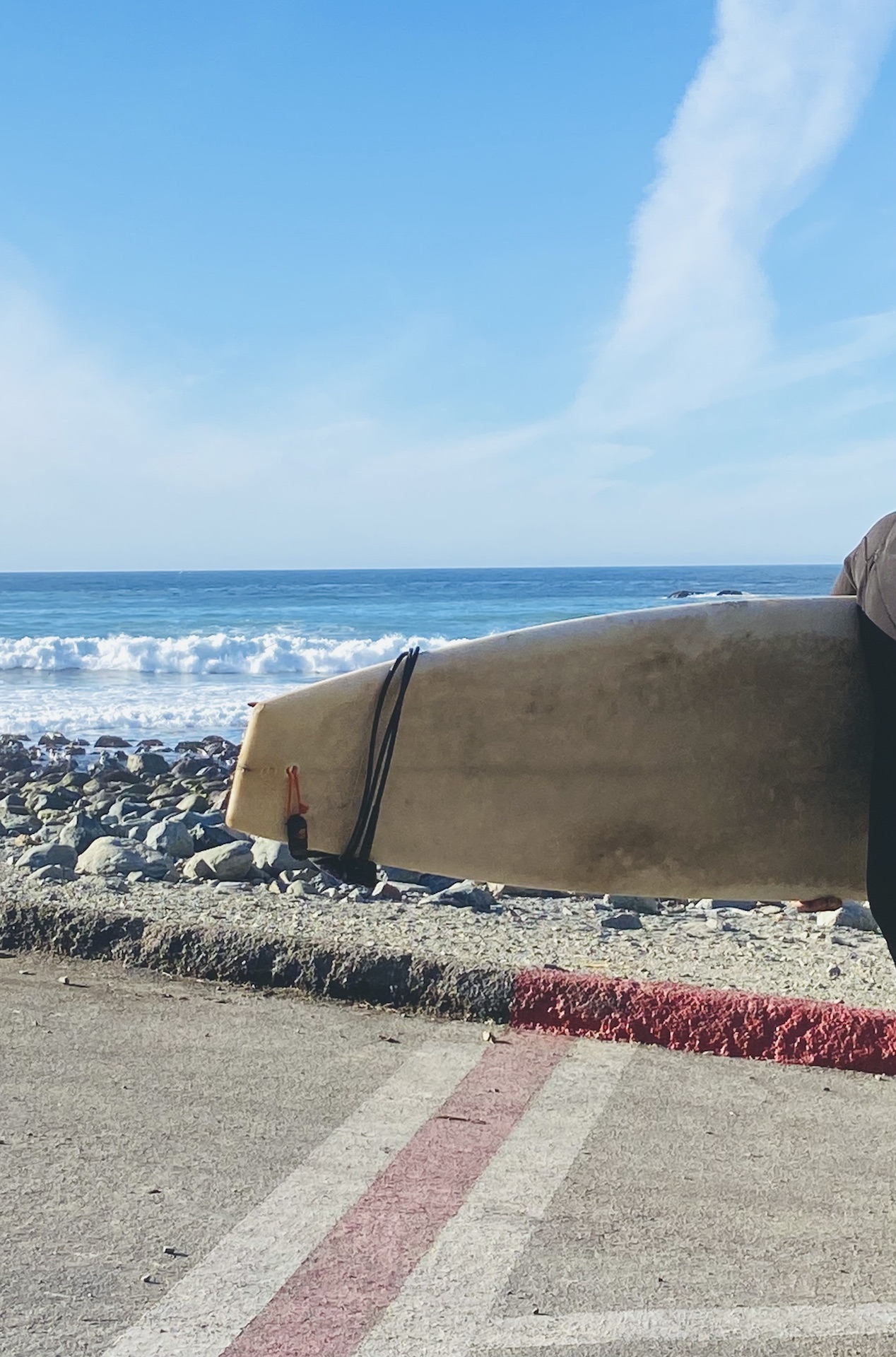
As you make your way north to the Central and Northern coast, the buzz of Southern California starts to fade: The towns up here are less populated, houses tucked away in dark-green hillsides that plunge into the sea. Surfers are encased in heavy wet suits to tackle the coast’s famous breaks. The air is saltier, cooler, fresher. Busy beaches give way to secluded coves hidden between cliffs. Coastal fog seeps in between the redwoods, diffused rays of sunlight highlighting the blankets of prehistoric ferns and moss on the forest floor.
Danielle Kroll
(Side note: Fresno has an authentic Japanese mochi place. Kogetsu-do Bakery is located at 920 F Street and is opened Friday to Monday from 9AM – 1PM. This landmark was opened in 1915 by Sugimatsu Ikeda and his wife. First on Kern Street before moving in 1920 to the current storefront on F Street. Like many Americans of Japanese heritage, they were sent to Jerome, Arkansas and were able to return after the war ended. Unlike many, they were able to continue their business. Today, their granddaughter Lynn is keeping the family recipes alive. Aside from mochi, you can also enjoy ice cream mochi (!), snow cone, and more. Kogetsu-do Bakery is on my list to visit. If you do go, let me know!
Travelling north in Central Coast
Lompoc
While part of Santa Barbara county, Lompoc is culturally Central Coast. In Lompoc you can see beautiful flower fields and launches from Vanderberg more up close.
Wade and I drove past Lompoc when we went camping at Jalama. That year, we started our spring camping trip at this campground. It was a beautiful drive to get there, just off the beach, near several surf spots, and not near anything else. The Jalama campground is literally end of the road. The train runs past it and other than that, it’s pretty remote. If you’re looking for a beautiful and quiet place to camp, check out my Jalama travel post. And yes, they’re still serving up the famous Jalama burger.
While in Lompoc, you can visit La Purisima Concepcion Mission State Historic Park (2295 Purisima Road, Lompoc) or see the murals in old town. Of the 21 missions in California, this is the most restored. The 2,000-acre park also includes hiking and riding trails. Open daily, La Purisima Concepcion Mission offers free guided tours Wednesday through Sunday at 1PM and at 11AM on Saturday.
California Missions Foundation


Photos taken from the Pacific Surfliner that runs from San Diego to San Luis Obispo. I took it from Union Station in LA. You get to see part of the coast you cannot from the highway.
Between Lompoc and Big Sur
Five Cities
Driving north in Central Coast, you’ll go past Nipomo and into Five Cities.
The “modern” Five Cities are Arroyo Grande, Grover Beach, Oceano, Pismo Beach, and Shell Beach.
The original Five Cities were Arroyo Grande, Halcyon, Fair Oaks, Grover Beach, and Oceano.
Five Cities are so close together that in some places, it isn’t clear whether you are in Arroyo Grande or Grover Beach. Tourists mostly head to Pismo Beach, Shell Beach, Avila Beach, and inland to the city of San Luis Obispo, which is just 10-15 minutes by car from Shell Beach.
If you’re visiting the area, accommodations include RV parks, motels, hotels, Airbnbs, and vacation rentals.
“The Treetop” in Avila Beach, a short walk to the ocean. Booking a tour? Use the code “TPKLOOKTA5” for 5% off on tours and activities. Check out Klook. (Promo code good to end of June 2026).
Pismo Beach
Pismo Beach is full of tourists and gets very congested. So be prepared. Some highlights of Pismo Beach is the beach itself and the pier. There’s a Pismo Beach sign that is popular for taking photos in front of.
Enjoy the sandy beach, surfing, boogie boarding (or watching the surfers), the wild life. I’ve seen rabbits and deer.
There are two main streets – Price and Dolliver. If you’re turning off onto Dolliver from Highway 1, note this is a short off-ramp and then a 4-way stop sign. I’ve witnessed quite a lot of out-of-order driving at this intersection!
Keep going straight to head to the pier, beach, and a lot of restaurants.
Or turn left onto Price Street. The bigger restaurants are on this street, like Giuseppe’s, Cracked Crab, Rosa’s, for example. Note that several of the eateries on this street also close early afternoon like Penny’s. If you love home-made sourdough and great sandwiches, check out House of the Rising Buns. This is a small place run by its owners who bake their bread fresh daily. There is seating in the front and also out back.
Restaurants, coffee shops, bakeries, donut shops, ice cream shops, shop shops dot both Dolliver and Price streets. Cypress is one down from Dolliver on the way down to the beach and pier. A lot more restaurants here, including the popular Splash Café at 197 Pomeroy Avenue.
There is street parking as well a parking lot. Find a spot for your car and take a walk around Pismo Beach downtown, a very walkable area.
Splash Café
Opened in 1989, Splash Café is known for its clam chowder. Pismo Beach has a long history of clamming! Their clam chowder often claims first place in the Pismo Beach Annual Clam Festival. Taking place on the pier the third weekend in October, this two-day festival is celebrating its 80th anniversary in 2026. Kicking off the Pismo Beach Annual Clam Festival is the morning parade. Enjoy the wine and beer garden, lots of vendors, food trucks, live music, and also a free kids’ zone, where they can play in the bounce houses.
Penny’s All American Café
Penny’s is a favourite among locals and tourists who come to Central Coast. With quick and friendly service, Penny’s menu includes waffles, pancakes, eggs, omelet, and more. Have you tried Loco Moco? It’s a delicious Hawaiian dish of rice topped with steak, gravy, and fried egg. Opened 7AM – 2PM, Penny’s is on Price Street.
Another popular breakfast place is Beachin’ Biscuits. Open daily from 6AM to 2:30, they now also serve lunch – burgers, salads, sandwiches, etc. We haven’t been since they moved into Giuseppe’s old deli spot. They have an updated menu. We may need to pay Beachin’ Biscuits a visit real soon.
Giuseppe’s
Giuseppe’s is a restaurant as well as a deli. If you want to grab a bite to eat, head to the Italian American Club aka Guiseppe Express. Choose from an assortment of gelato, pastas, sandwiches, pizzas, calzones, and more. When my family visited, they ordered a steak, and a salad. There is outdoor and indoor casual seating as well as a bar and more formal seating in the back.
Other well-regarded restaurants include Rosa’s, Ada’s Fish House, and Cracked Crab. Looking for pizza, there is the franchise Me-n-Ed’s. All on Price Street. Looking for sandwiches and fresh home-baked sourdough? Head to House of the Rising Buns. The owners are also super nice and friendly.


Things to do in Central Coast and SLO County:
- San Luis Obispo de Tolosa
- Shop local artists
- Slocally (877 Monterey)
- Making SLO (751 Higuera Street)
- The Natural Toolbox (Suite 127, Premium Outlets, Pismo Beach, 333 Five Cities Drive)
- Morro Made (490 Morro Bay Blvd)
- Cayucous Collective (123 N Ocean Avenue). In case you love original hand drawn postcards, let me know. I have a series for Central Coast, starting with SLO county.
- Oso Flacos Lake, a beautiful park with trails including ones that lead to the ocean.
- Roosters and the Swinging Bridge at Arroyo Grande. Visit the Farmers’ Market, grab some lunch at Branch Street Deli & Pizzeria, drop by Lightning Joe’s Guitar Heaven, an Arroyo Grande institution since the 80s. There are a few cute shops in Old Village.
- Montaña de Oro near Los Osos, or MDO to the local surfers. Walking trails, dramatic landscapes, spring blooms, bird watching.
- Morro Rock and harbour seals in Morro Bay. Check out the village, park by the rock to watch the surfers, ground squirrels, and seagulls… take your shoes off and take a walk on the beach.
- Monarch Butterfly Grove in Pismo Beach
- Madonna Inn – try their iconic Pink Champagne Cake. Guys, check out their bathroom.
- Hiking – SLO has an abundance of trails. Pismo Preserve gives you a great view. An easy trail is Bob Jones Trail.
- Whale watching, tours from Avila Beach or Morro Bay. More on whale watching here.
- Elephant seals and lighthouse at Piedras Blancas. If you’re going to walk the trail, check the conditions first. People have shared there are ticks in some seasons. If you go in January, you may see pups. Keep your distance.
- Zebras at San Simeon, the descendants of the original zoo of the Hearst Castle. Sometimes from the highway or when you take the shuttle to Hearst Castle, you can see them roaming the hills.
- National Historic Landmark of Hearst Castle built between 1919 and 1947. We visited Hearst Castle on one of our many family road trips down to California. After all this time, the only thing I remember is the blue pooI. The Neptune Pool. The other pool, the Roman Pool, also has blue tiles. Opens daily from 9AM. Tickets start at $35 for adults and $18 for kids aged 5 to 12. Reserve your ticket online up to 60 days head. All visitors must choose a tour and the one recommended for first-time visitors is the Grand Rooms Tour. Both semi-private and private tours are available. Note: you cannot drive directly to Hearst Castle, just to the visitor centre. hearstcastle.org


In Danielle Kroll’s book, without a section on Central Coast, the Northern California section is a road trip from San Simeon to Crescent City, a 613-mile trip that takes about 14 hours non-stop. She recommends taking eight to ten days. She has illustrations of many of these places as well as wildflowers and plants, including the state flower, California Poppy. This golden flower has multitude of medicinal uses. This is not the opium poppy.
Big Sur
Big Sur is a beautiful rugged part of California. On a beautiful November day, Wade drove us along one of the most scenic routes I’ve been on. Winding around the coast with our cat Luna, we headed north to Pacific Grove and Monterey. The beautiful 75-mile drive through Big Sur is the perfect opportunity to rent a vintage car, top down. Here’s our trip through Big Sur.
Like many areas of the Pacific Coast, Big Sur is vulnerable to slides and erosion. Highway 1 was most recently closed between February 2024 and January 2026. The Regent Slide shut down nearly seven miles of the highway between Esalen Institute and Lucia Lodge (40 miles north of San Simeon).
Late January 2026, the road was opened, a couple of months ahead of forecast. You can once again drive all the way through from San Simeon to Carmel.
For the latest information, check with BigSurCalifornia.org.
As our destination that time was Pacific Grove and we had Luna with us, we only made cursory stops along the way, such as the famous surf spot, Willow Creek. We also stopped for food and for photos. There are several viewpoints along the way and it’s worth it to stop. The views are breathtaking.


Stops at Big Sur, Central Coast California
- Art Galleries such as Hawthorne Art Gallery (48485 Highway One)
- Nepenthe, a family-owned restaurant opened in 1949 known for its views and its Ambrosia Burger. Also part of the property are The Phoenix Shop and Café Kevah. The restaurant is open daily while the café closes for the winter season.
- It’s 29 miles south of Carmel and 63 miles north of San Simeon. Here’s more historical info on Nepenthe from SFGate. 48510 Highway One.
- Henry Miller Memorial Library. From 1944, Henry Miller (1891-1980) lived for nearly twenty years (on and off) in Big Sur, which was a quiet and spiritual place for many creatives. It was isolated and the land- and seascapes were inspiration. At that time fewer than seventy people lived in the area. With his books banned in the US at the time, Henry Miller was a controversial figure. Newspapers called him a “sex anarchist” in a sex cult. According to his friend and personal secretary, painter Emil White (1901-1989) said that, on the contrary, Henry Miller spent his time at his small cabin with his wife and daughter or indulged in his passion, ping pong. It was in Big Sur that Henry Miller wrote his memoir, Big Sur and the Oranges of Hieronymus Bosch. The Henry Miller Memorial Library was a bequest from Emil White who had transformed his property into a memorial. Located at 48603 Highway One, 35 miles south of Carmel, the Library is open daily from 11AM to 5PM.
- Skyes Hot Springs, located in the Ventana Wilderness, is secluded.
- Access is a round-trip hike of 18 miles on the Pine Ridge Trail, a well-marked trail
- Its trailhead is near Big Sur Station at 47555 Highway One. Limited parking.
- Remote so visitors often camp overnight.
- Clothing-optional
- Slates Hot Springs
- Also known as Esalen Hot Springs
- Clothing-optional mineral spring facing the Pacific.
- For access, purchase a Massage Day Pass or Alternative Service Day Pass from Esalen Institute. This gives access to the springs from 8:30AM to 8:30PM. Or you can get a Day Pass when you volunteer for a three-hour shift in the kitchen, farm and garden, or for the cabins. More info at esalen.org/volunteer-at-esalen. Night Bathing (1 to 3AM) is open to public and requires reservations which are currently closed. 55000 Highway One.
- Camping and Hiking.
- Big Sur campgrounds get booked up very quickly, with a rolling 6-month availability.
- Nacimiento Campground is the only fully first-come first-serve campground.
- Pfeiffer Big Sur State Park Campground
- Popular because of the Redwoods.
- Large park, with a view of the Big Sur River Gorge
- No coastal access.
- Plaskett Creek Campground across the highway from Jade Cove
- The facilities at this park-like campground include drinking water, picnic tables, and flush and vault toilets.
- During road closures, this campground can only be accessed from the south.
- Opened year-round, a nightly fee is $45/site.
- Ragged Point Inn (19019 Highway One) started as a 2-room motel
- 39 rooms, gourmet restaurant, gift store, mini-mart.
- Southern edge of Big Sur.
- Pets ($50/day for the first dog and $25/day for the second dog) are welcome in specific rooms.
- Big Sur River Inn, 46800 Highway One, the first hotel and restaurant in Big Sur, sits by the river.
- Deetjen’s Big Sur Inn (48865 Highway Way)
- History goes back to the 1930s. The cabins were built between 1936 and 1961 in traditional Norwegian design.
- The Inn continues to offer a quiet retreat, without wifi, cell service, or TVs.
- For ultra luxury, Alia Ventana Big Sur (48123 Highway 1). This 162-acre property offers luxurious rooms and tent cabins (glamping). The Glass House is available for private dining and events. Natural light flooding through the glass, this dining experience includes a floor-to-ceiling view of the ocean. Or you can enjoy the views from the outdoor meadow and mountain pools. Venture to their Japanese hot baths to experience onsen culture.
- New to onsen? Here’s our experience near Kyoto.
- Now managed by Hyatt, the original Ventana Big Sur was developed by producer Lawrence A Spector in 1975. This was an investment from the movie Easy Rider‘s profits.
- Wade’s dad shared he stayed at Ventana years before. Still fresh is his memory of gigantic California condors soaring by while he was sitting about 300 feet above the ocean.
- Stores
- Big Sur Deli & General Store. 47520 Highway One, next to the post office, daily 7AM to 8PM.
- Fernwood General Store. 47200 Highway One, at the resort and campground.
- Surf spots
- Willow Creek – we stopped here. The parking lot was busy. The beach easily accessible.
- Sand Dollar Beach, another well-known surf spot. Takes a steep climb down a wooden staircase to get to (69232 Cabrillo Highway)
- Located between Cambria and Big Sur Station, you can find jade stones and for sand dollars. Winter low tides are great for rock hunting.
- Jade Cove, south of Sand Dollar Beach. Go for more jade stones which come on many colors, including white. The climb down to Jade Cove is even more precarious.
- many secret surf spots
If you have a small group, consider this 3-day private tour round trip from Los Angeles. It includes all the highlights.
Carmel-by-the-Sea
Carmel-by-the-Sea, or more commonly called, Carmel, is a hugely popular destination on the Pacific Coast. An artist colony in the 1900s, Carmel was once home to mostly artists and still offers an abundance of art galleries. If you love antiques or boutique shopping, this coastal village is a charming stop on Highway One.
Carmel Art Walk takes place monthly 4PM to 7PM the second Saturday. Join this free tour and follow the blue lanterns to visit galleries and meet the artists.
A short walk from Carmel’s centre is its famous beach. From the south end, you can see Frank Lloyd Wright’s Clinton Walker House. The northern end of the beach is the famous Pebbles Beach.
Hidden Courtyards and Passageways
While in Carmel, you may notice that they don’t use addresses. Rather, they describe a location such as the corner of two streets. Another interesting about this town is the hidden courtyards and passageways. With names like “Secret Garden Passageway” and “Cinderella Lane”, these forty-plus passageways go back to the 1920s. Stop at Carmel Coffee House for a cup of organic coffee.
Clinton Walker House
The “Cabin on the Rocks” was designed and built for Mrs Clinton Walker. This 1,400-square-foot property is Frank Lloyd Wright’s only design by the ocean. Construction was completed in 1952.
Reflecting his vision of designs integrating with natural settings, this home sits atop boulders and appears like a ship’s bow overlooking the Pacific. Three of its rooms overlook the ocean, which is reflected in the blue-green roof. The roof, tiled with porcelain panels, was later re-done in Frank Lloyd Wright’s original vision of copper shingles. The living room’s hexagonal layout is another of its well-known features.
The architect wished that this house would give Mrs Walker joy and “spiritual uplift”. In 1977, the Clinton Walker House was added to the National Register of Historic Places. In 2023, the Walker estate sold it for $22 million.


Pacific Grove
Pacific Grove is a short drive from Carmel and Monterey. Both Pismo Beach and Pacific Grove in Central Coast are popular overwintering spots for Monarch butterflies. If you’re in either place between October and March, do head to the Monarch Butterly sanctuary. The one in Pismo Beach is small, though it is a nice walk which continues down to the beach. A ranger sets up binoculars for visitors to peer through and he gives talks about the butterflies.
While in Pacific Grove, we stayed at Lighthouse Lodge & Cottages which is pet-friendly. It’s a short walk to Asilomar State Beach, or what was once Moss Beach. A narrow strip of sandy beach about a mile long, this beach has marvelous rock formations. Quite a spot for photographers. We went in the evening and the morning after we checked out and the light. Oh, the light.
(Note: permit from the California Film Commission is required for any publication of still photographers or film taken here.)
From Point Pinos to Point Joe, no shell collecting or fishing is allowed as the area is within Asilomar Marine Preserve.
Asilomar Coast Trail
Because our stay in Pacific Grove was short, we didn’t have the chance to check out Asilomar Coast Trail or Asilomar Dunes Natural Preserve. Asilomar State Beach is part of this 3/4-mile trail, which can be accessed from multiple places along Sunset Boulevard. Walking along the coast, keep an eye out for the rare and endangered California plants – Menzies’ wallflower and Tidestrom’s lupine, black legless lizard, and nesting birds.
Both Menzies’ wallflower (erysimum menziesii) and Tidestrom’s lupine (Lupinus tidestromii) only grow in the sandy dunes of the California coast. Aside from this area, subspecies of Menzie’s wallflower also grow further north in Mendocino and Humboldt. Part of the mustard family, it blooms yellow in the spring. With Tidestrom’s lupine, you’ll notice them with their beautiful flowers ranging from white, light blue to lavender. This plant is toxic so do not eat.
The California legless lizard, anniella pulchra, may look like a snake. It’s actually a lizard measuring about 4 to 7 inches, excluding the tail. The black legless lizard is a subspecies exclusive to the Monterey area. I didn’t know this – snakes do not have eyelids and the legless lizard does.
On the way to the beach from Lighthouse Lodge & Cottages is Point Pinos Lighthouse, which is believed to be haunted by lighthouse keeper, Emily Fish.


17-Mile Drive
The famous 17-Mile Drive is a scenic route on the Monterey Peninsula that takes you to Pacific Grove. From Highway One, take the 68 to take this tolled road through the famous Pebble Beach. The fee is $12.25 per vehicle (no motorcycles) and the gate is open to the public from sunrise to sunset. The fee is reimbursed when you spend $35 or more at Pebble Beach. If you don’t have time, stop at the Pebble Beach Visitor Centre. Otherwise there are many more stops along the way to visit. You can also book a private guided tour with Pebble Beach.
Before Pebble Beach became a world-class golf course and resort and exclusive real estate, it was once a 4000-acre rancho, an area called “Stillwater Cove”. Initially sold in 1846 for $500, going through different owners, it was auctioned for 12 cents per acre in 1846. The new land owner, David Jacks, later sold parcels to the railway and Pacific Grove. He also leased some land to what became a small village of Chinese fishermen.
According to the Monterey County Historical Society, “Chinese fishermen were the first to mine the rich marine treasures of Monterey Bay, and their industrious efforts as early as the 1850s helped make Monterey one of California’s most successful fishing ports. The story of Chinese settlers of Cannery Row is a tale of both success and sorrow–hard work tempered by suspicion, fire, and cultural conflict.”
Hotel Del Monte and the 17-Mile Drive
The original 17-Mile Drive goes back to 1881.
Charles Crocker, one of the “Big Four” of the Pacific Improvement Company, built Hotel Del Monte to attract visitors to come by rail. In 1880, after 100 days of construction, this luxurious hotel opened and indeed became an instrumental force in transforming the area into a sought-after destination in California. The 17-Mile Drive, originally eighteen miles long, was then created to show visitors the beautiful coastal views. These horse-drawn carriage rides would take hours. Some people, like President Roosevelt, went on horseback. He described the horse in a letter to his daughter Ethel as “a little beauty, spirited, swift, sure-footed and enduring.”
At its height, Hotel Del Monte’s grounds were 20,000 acres and guests included presidents and world leaders, royalty, famous artists and creatives, and film stars. While skeptics initially called it “Crocker’s Folly”, this grand dame became “The World’s Most Elegant Seaside Resort” even before Sam Morse made it a legend.
Hotel Del Monte certainly has a rich history. During World War II, the Navy used it as a base. The Naval Postgraduate School, founded in 1909, purchased the hotel and then moved from Annapolis, Maryland to Monterey, California.
Today, Hotel Del Monte is available for stays. See who can stay. Eligible patrons can also sponsor civilian guests and can book a total of four rooms, without needing to submit a request to the hotels’ Group Coordinator.
Stops on the 17-Mile Drive
The Pebble Beach website suggests seventeen stops. In Pacific Coasting, Danielle Kroll illustrates most of these stops. She writes that the views are “splendid no matter which stop you pull off at” so enjoy. To see tide pools, she suggests Seal Rock and Bird Rock.
- Shepherd’s Knoll, a vista with a view of Monterey Bay, that’s named after Abraham Shepard, who helped to build the road in the forest. Parking is a small turn out space.
- Huckleberry Hill is part of a preserved forest. As suggested by its name, the hills are full of huckleberries, edible sweet-tart berries
- Spanish Bay Beach is so named because the Spanish explorers, while looking for Monterey Bay, camped here in 1769. Stop here for a walk along the boardwalk over the dunes. Offshore winds from the southeast may bring surfers to this exposed beach. The best time for surfing here is the winter.
- The Restless Sea, coastline with turbulent waters. May be windy and a spot for photographing dramatic landscapes. It’s connected to the next stop, Point Joe, via a walkway.
- Point Joe, the site of several shipwrecks
- China Rock. 1800s Chinese fishing village.
- Bird Rock. Here, bird poop was removed in 1930 to be used as fertilizer. Some five feet of it.
- Seal Rock. Take a stroll on the boardwalk. See the Gingerbread House.
- Fanshell Beach Overlook, where Harbour Seals come to pup. Between April and June, areas are closed to the public.
- Cypress Point Lookout
- Crocker Grove. One of two native Monterey Cypress forests, this is home to the oldest and also the largest trees. Named after Charles Crocker.
- The Lone Cypress sits at the “Midway Point” on the original drive. It is also the logo of Pebble Beach Resorts.
- Ghost Trees at Pescadero Point. Sun-bleached Cypress trees live here, a Big Wave surf spot.
- Pebble Beach Visitor Centre
- Pebble Beach Golf Links, opened in 1919, was where Chinese fishermen once sold abalone shells to visitors on the original 17-Mile Drive and was one of the earliest, if not the first, fully irrigated golf courses in the US.
- Pebble Beach Equestrian Centre, opened in 1924, is where you can book guided trail rides.
- Ford Meadow
Monterey
If you’re a fan of John Steinbeck, you’ll know about the sardine-packing history of Monterey and Cannery Row, its town centre. Here, like the name suggests, was once thriving canneries. Actually, this street was Ocean View Avenue, before being renamed to pay homage to John Steinbeck.
On our road trip through Central Coast, we did not get to explore Monterey. We went to the pier and had lunch. That’s Wade in his Sasquatch t-shirt and then we went to the pier to look at all the jellyfish. The water was full of them, orange undulating. Pretty hypnotic.


From what I’ve read, Monterey is an interesting place to visit and one I’d return for a longer stay. If you love whale watching, Monterey is a good place to be. Monterey Aquarium is also very popular. You’ve probably seen a ton of photos of this aquarium on social media! I know I have.
Join the Mist, Mayhem, & Murder: Monterey Ghost Tours (4.5 stars) to learn about local lores and legends.
If you’re into the supernatural, check out Monterey.
I scoured the internet for where to go and what to eat. Here’s what I found:
Sardine Factory
701 Wave Street, Monterey. Open daily from 4:30PM to 9:30/10:00PM SardineFactory.com (831) 373-3775
When the Sardine Factory opened in 1968, Cannery Row was nothing like it is today. The rent for the building was $200 a month. Later the owners purchased it for $98,000. Starting and growing Sardine Factory was quite an entrepreneurial adventure.
Over the years, the restaurant with 72 seats was expanded to 250 and to include the Conservatory, built in 1981. The original room is today’s lounge. The bar was actually from a 19th century ship. Its reputation for an impressive wine list also grew, thanks for Master Sommelier and winner of the 1984 Krug Cup, Fred Dame. He was the first to pass the three parts – theory, service, and tasting. There are fewer than 300 Master Sommeliers in the world. If you are looking for fine dining in Monterey, in a restaurant where waitstaff once wore cummerbunds, give Sardine Factory a try.
Whaling Station Steakhouse
763 Wave Street, Monterey. Open daily from 4:30PM to 9:00PM TheWhalingStation.com (831) 373-3778
Whaling Station is known for its steaks, including filet mignon. Its menu also includes a number of seafood dishes, as you can expect in Monterey. When checking out menus, I always take a peek at the dessert. Here, you’ll find Pavlova (soft-baked meringue with berries), mini Key Lime Pie, and some of my other favorites – Créme Brûlée, Tiramisu, Cannoli, and Affogato.
Crystal Fish
514 Lighthouse Avenue, Monterey. Open daily from 11:30AM/12 noon to 9:00/10:00PM, depending on the day. Weekdays closed between 2:00 and 5:00PM Crystalfish-Monterey (831) 649-3474
Crystal Fish is an authentic Japanese restaurant and has rave reviews.
Passionfish
701 Lighthouse Avenue, Pacific Grove. Open daily from 5:00PM to 9:00PM Passionfish.net (831) 655-3311
Passionfish serves sustainably-sourced wine, ingredients, and seafood. Opened in 1997, Passionfish is now run by Berk Guvenc with Meral Alpay as Chef. The menu offers tantalizing options for every course. Thyme-infused potato and leek soup or sea scallop to start. Or perhaps the beet salad or Dungeness crab salad. The main course – duck confit, lamb breast, vegetable tajine, rainbow trout… ah, I love rainbow trout. Their dessert menu is quite innovative like lemongrass meringue, banana ice cream, mint and espresso mud pie, and chocolate sorbet.
Alta Bakery & Café
502 Munras Avenue. Monterey. Open daily from 7:00AM to 4:00PM AltaMonterey.com (831) 920-1018
Located inside the historic Cooper-Molera Adobe, Alta Bakery is a popular place close to downtown Monterey. If you’re headed to Alta on the weekend, go early to avoid a long line. Everything is made fresh each day, with a menu that has quite an offering.
Cooper-Molera Adobe
The historic landmark of Cooper-Molera Adobe brings us to 1827, when the town was the commercial capital of Mexican Alta, California. This 2.5-acre complex consists of two homes, warehouse, barn, gardens, and even a corner store. It’s always been multi-use, passing through many families.
Today you can visit Cooper-Molera Adobe for free and view the exhibitions showing its history and stories. Its mixed-use past continues today with the museum and commercial ventures. Inside what was the corner store is Alta Bakery and Café. It was where Pioneer Bakery was located. That was Monterey’s first commercial bakery.
Capitola
Before leaving Central Coast, we have Capitola and Santa Cruz.
Capitola, just an hour away from Monterey, started as a tent camp back in 1874 and like Pismo Beach, it became where people from inland went to, to get away from the scorching heat. From tents to colorful summery and pastel buildings, Capitola is the oldest coastal resort town on the West Coast.
Being just 90 miles from San Francisco, Capitola is a great day-trip or weekend getaway for those living in the Bay Area. While Danielle Kroll’s book didn’t have much more to say about Capitola, I was intrigued and looked more into this little village. It looks quaint, in the good sense of the word. Not in the way suspicious Craiglist listings describe their rentals.
Capitola looks like a laid back place to hang out and enjoy the brightly-painted buildings that remind me of Bermuda. There’s the Esplanade Park, seawall with tiles painted by the community, Capitola Wharf, and boutiques for browsing in.
Capitola Village
Capitola Village By the Sea is one of the first vacation retreats on the west coast. Home to the Soquel who have lived here for over 2,000 years, it’s unsurprising that it continues to be a gathering place year-round. It is walkable with events throughout the year such as the Wharf to Wharf Race, Capitola Beach Festival, and Tree Lighting. If you’re a runner, check out Wharf to Wharf which goes from Santa Cruz to Capitola. A race that’s limited to 16,000, it’s called “The best little road race in California”. Because it’s so popular, registrations are closed in just a few hours. In 2026, it takes place July 26 and if you’re visiting the area, note the road closures.
If you’re a surfer, this area, and California as whole, is a destination to be. Of course, surfing was not born here and was brought here, going back to the 1900s. Hawaiian surfer George Freeth introduced surfing in 1907 at Redondo Beach. Of course, Hawaiian Olympic swimmer, Duke Kahanamoku, was instrumental in seeding California surfing. My father-in-law got into surfing as a young man and travelled to O’ahu after high school. There, he met friends from Kaua’i who invited him still a very hush-hush island for surfing. They used to hike in from Waimea to the longest left on the island. Now, you can park on the highway and walk a short distance.
A soft, gentle, right-hand reef/point that is popular with beginners and longboarders, Capitola is a staple of the Santa Cruz surf scene, and has the crowds to prove it (especially in summer). There is also a shorter, slightly more powerful left off the back of the right.
Surfline
Santa Cruz
“Santa Cruz, a short drive from Capitola, epitomizes the laid-back West Coast beach town vibe.” – Danielle Kroll
If you love roller coasters, Santa Cruz still has its wooden one. Its amusement park opened in 1907, making it the oldest one in California.
The places Danielle Kroll suggests in Pacific Coasting are:
- Santa Cruz Beach Boardwalk
- Seabright State Beach
- Marianne’s Ice Cream
- Santa Cruz Surfing Museum
- Natural Bridges State Beach
- Wilder Ranch State Park
Since I’m not from California, I turned to my California-native husband and asked about Capitola and Santa Cruz. As a surfer, a lot of what he said was about surfing. With the nickname “Surf City,” it’s not surprising that this area has surf spots for all levels and it has surf year-round. This can mean that you may meet strong localism. Capitola Beach, being a protected inlet, is probably the most beginner-friendly. So it’s also not surprising how built up and how pricey it’s gotten.
Also, he mentioned that people from Santa Cruz would proudly say they’re in NorCal, rather than Central Coast. Even though they’re literally in the middle of California. Hey, don’t throw shade on him.
California is a gigantic state and it makes sense that it is SoCal, Central Coast, and NorCal. Having spent time in Humboldt, I actually think of it when people say NorCal. Growing up, I’m definitely more familiar with LA and San Francisco, where I have family. I didn’t learn about Central Coast until we moved here a few years ago.
One thing to know about Central Coast is that for several months in the year, from May through the summer, the weather is rather grey and even cool to cold. The names for these months are May Gray, June Gloom, No-Sky July, and Fogust. Often it’s cool gray mornings though it can be depressingly the whole day. This is because of the cooler and moist air trapped near the ocean surface. Actually, it’s not exclusive to Central Coast and can be observed in SoCal. However, this weather pattern does not deter visitors and if Central Coast is on your bucket list, come! Today, as I wrap up this post, it’s a beautiful sunny day. Not a cloud in the sky.