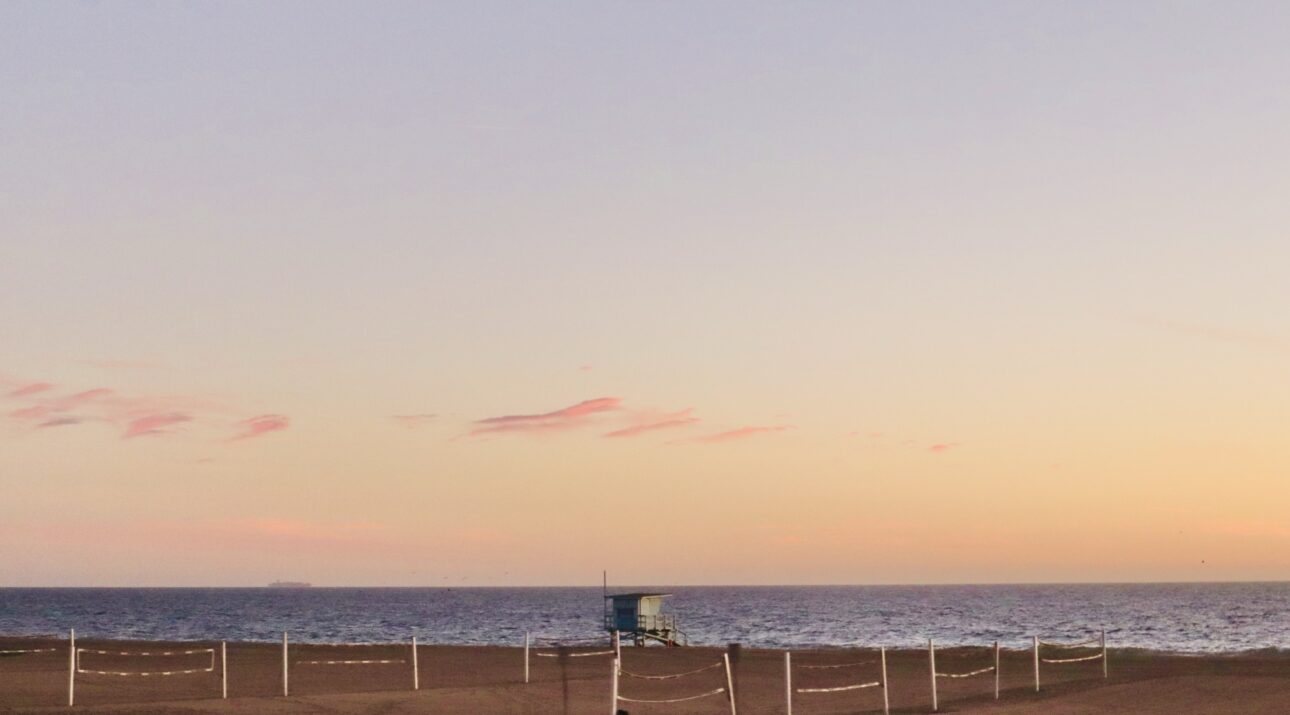
Pacific Coast Highway
We begin with California (Part 1) in this series called An Ode to Pacific Coasting. These travel posts are a book review, of sorts, of Danielle Kroll’s Pacific Coasting. This travel book, along with her illustrations, takes the reader from Southern California to Vancouver Island, Canada. In this series, I am taking the same route and sharing my travel stories with you. As a Canadian currently living in California, the Pacific Coast is home grounds and I’ve taken lots of road trip. I’ve also enjoyed researching US history, folklore, and stories. Danielle Kroll also has a book called East Coasting, for road trips in New England.
We begin this series An Ode to Pacific Coasting in California. Part 1 is Southern California through Central Coast. The “Golden State” is known for many things. Becoming the 31st state in 1850 and now the third largest, California makes up a big part of the US, in terms of economy and population. It’s the first state to have a $1 trillion GDP. We associate it with Silicon Valley, Hollywood, Redwoods (located in Sequoia National Park, General Sherman is the world’s largest tree), diverse geography, Gold Rush… or at least I do. It was the Wild West, where many people, people of many ethnicities, headed to, to “strike gold” in various ways.
San Diego | Los Angles | Ventura | Santa Barbara | California Missions
California is diverse; it has the highest immigrant population in the country. At 10 million, it’s twice as much as the next state, Texas. Before settlers came, it was home to many tribes such as Yuma, Chumash, Hupa, and Yurok. California’s biggest “land back” initiative was 47,097 acres of ancestral land returning to Yurok in 2025.
From California.com
- California’s top export is almond and the official state fruit is avocado. Living in California, I’ve actually met many almond farmers. Many of them have sold off their farms as the newer generations don’t want to continue. Central Valley is the world’s almond capital. Did you know that the heat of the summer have led to many farmers seeking refuge and relief on the coast? Many of the coastal homes on the Central Coast, like in Pismo Beach, are the second homes of farmers who have been coming here for decades.
- California’s state tree is the Redwood (since 1937)
- Its motto is “eureka” (to honour the Gold Rush part of its history)
- 100,000+ earthquakes a year
- The fortune cookie was created in California, either LA or San Francisco
- California has the most national parks. These nine are Channel Islands National Park, Death Valley National Park, Joshua Tree National Park, Sequoia National Park, Kings Canyon National Park, Lassen Volcanic National Park, Pinnacles National Park, Redwood National and State Parks, and Yosemite National Park. These parks show the diverse geography and climate of California.
- In 1873 Levi Strauss and Jacob Davis brought the world blue jeans.
- California is the only state to have hosted both summer and winter Olympics. In 2028, LA will again host the summer Olympics. It already did in 1932 and 1984.
My California
To me, until quite recently, California was San Francisco and Los Angeles, the two cities where I have relatives and the places I visited the most. The cold windy and hilly in contrast to the warm, crowded, beachy, and fun.
Living in Singapore, without a direct flight home to Vancouver, I also stopped over either in LAX or SFO. Sometimes, I’d meet my mom and my sister for a few days of eating and shopping in San Francisco before or after a trip. Clam chowder, mussels, discovering Juniper Ridge at the piers, shopping for yarn with these two avid knitters, riding the trolley…
Northern, Central, and Southern California
Now, living in Central Coast, I see how different Northern, Central, and Southern California are.
According to the Pico Act, Northern California is the uppermost 48 counties. The geographical centre is at 37°09′58″N 119°26′58″W, north of Fresno in Central Valley. Both definitions divide the state into two, ignoring Central Coast, which prides itself as “not LA, and not San Francisco.” You see bumper stickers and signs all over Pismo Beach.
When we do talk about Central Coast, the boundaries are not all that certain. For many, like surfers, Point Concepcion transitions between Central Coast and Southern California, where the Pacific Ocean meets the warmer Santa Barbara Channel. This makes the counties of Los Angeles, San Bernardino, Orange, Riverside, San Diego, Ventura, and Santa Barbara SoCal. Some definitions also include Kern and San Luis Obispo. Other definitions put Santa Barbara as Central Coast. The northern boundary? Central Coast includes Monterey Bay and Santa Cruz.
The “western Gate”
To the Chumash, Point Concepcion is sacred and the portal for the dead to pass through to the paradise realm of Similaqsa. Located at the westernmost point of their territory, the traditional name for “Western Gate” is Humqaq (“The Raven Comes”). Here the souls take on the “celestial eyes” of the Raven to walk the Path of the Dead to reach paradise. Read more from the John Anderson Library. [download the article in PDF]
According to Study Country and Wiki, Central California is “bounded by the Cascade Range to the north, the Sierra Nevada to the east, the Tehachapi Mountains to the south, and the Coast Ranges and San Francisco Bay to the west.”
If you’re travelling to California, here are some considerations:
Want to see beautiful wildflower blooms? Go between April and June. It’s quite a sight – check out our camping trip at Jalama, near Santa Barbara. Interested in Monarch Butterflies? Visit Pacific Grove or Pismo Beach between October and March. Head out early morning to see all the butterflies clustered on the eucalyptus branches. Whale watching? There are many spots all along the Pacific coast. Here’s my post about whale watching in the Central Coast.
So, following Danielle Kroll’s book, let’s start in Southern California and travel north, all the way to Vancouver Island. The book was published in 2020 – let’s see what updates we have going into 2026.
Southern California
My most wonderful memory of LA is the twin first experience of the churro and Gypsy Kings, walking along a beach boulevard. Probably Venice Beach. I was happily checking out the shops, eating my churro and hearing Gypsy Kings play, with the late afternoon sun.
Do you have memories you can reach into and still feel it with all your senses?
It’s also Lawry’s and Baked Alaska, Rodeo Drive, Belgian waffles in Brentwood, Universal Studios, Knott’s Berry Farm, and Disneyland. It’s Space Mountain and riding in the back of a big old Cadillac through LA. My parents’ friend would pick us up and take us to her local shopping haunts.
Then as an adult, doing a Jin Shin Jyutsu course in Marina Del Mar, and more recently, San Pedro, West Hollywood, San Diego, and LA for my cousin’s wedding. These road trips with Wade. He grew up in Malibu, before it became the Malibu we now know. I love listening to his and his dad’s surf stories, about the mega change, localism, crowded surf breaks, and living at Point Dume.
San Diego
San Diego, or San Diego de Alcalá as it was first name, was founded in 1769 and was the first Spanish settlement in California. was founded in 1769. This was home to the Kumeyaay people. Their name for it, Kosa’aay, means “drying out place”.
These days, San Diego county has the most farms, mostly small ones, in the country. It’s the top producer of avocado. Find the beautiful Flower Fields in Carlsbad, north of San Diego. Their ranunculus, or buttercups, fields are the largest in the world. San Diego, being a popular vacation city, has no end to experiences and sights. What do you like?
La jolla and Dr Seuss
From 1948, La Jolla was Dr Seuss’ home, where he lived with his wife Audrey (1921-2018). Dr Seuss was the pen name Theodore Seuss Geisel (1904-1991) used since his days at Dartmouth. While living in this coastal village, Dr Seuss wrote 48 books, including The Cat in the Hat.
La Jolla, and the view from his home atop Mount Soledad, provided much inspiration for him. The Monterey Cypress found in Ellen Browning Scripps Park was his inspiration for the Truffula trees in his own favourite book, The Lorax. Sadly, the Monterey Cypress that inspired him, the one that overlooked the La Jolla coves, fell in June 2019. “I speak for the trees.” – The Lorax.
Upon Audrey’s death, the property was gifted to UC San Diego. Its Geisel Library has the largest collection of Dr Seuss’ work. The 20,000 plus items include manuscript drafts, original drawings, sketches, and notebooks. Visitors can view these during summer exhibits, as well as on his birthday, March 2, which is National Read Across America Day.
Due to be released in June 2026 is a first printing of 500,000 copies of Sing the 50 United States. This is the latest discovery of a full manuscript since his death. Another posthumous find, What Pet Should I Get?, was published in 2015.
Or perhaps you want to catch The Cat in the Hat show that will be touring North America in 2026? First adapted for a stage production in 2018, it’s been touring intenationally.
From San Diego to San Luis Obispo, the 341 miles can take a mere 7 hours of driving. Danielle Kroll recommends taking five to eight days for a road trip. You can also take a train like the Pacific Surfliner for this trip. I took it north from Union Station in LA. The train runs along parts of the coastline that we don’t see from the highway. It’s a beautiful part of California, undeveloped and still quite wild. When the flowers bloom, it’s quite a sight.
Of course, speaking of the Pacific Coast, we have to talk about beaches. There are some beautiful and very crowded beaches in SoCal. Stunning sunsets. Many beaches along the Pacific coast are a great place to visit at low or negative tide for the tide pools. Here’s a post about our tide pool adventure in Pismo Beach, Central Coast California.
You also cannot talk about San Diego without talking about surfing. Oceanside, Sunset Cliffs, Blacks, and Trestles, where the World Surf League heads to in September. (Technically, it’s where Orange County starts.) Check out Windansea Beach for its iconic Surf Shack.
Sightseeing in San Diego
For the San Diego area, Danielle Kroll suggests San Diego Zoo, La Jolla, and Torrey Pines State Natural Reserve. Grab a Go City Pass for your visit to San Diego.
- San Diego Zoo is 100 acres located in Balboa Park and is known for its conservation work. Open daily from 9AM, the zoo has different closing hour depending on the time of year. As far as zoos go, the San Diego Zoo is known to be on the ethical part of the spectrum. Located in the heart of the city, Balboa Park is 1,200 acres that began as the “City Park” and later renamed after Spanish explorer Vasco Nuñez de Balboa. Travel through this huge park that houses 15 museums on their free tram. balboapark.org
- La Jolla is a coastal village where you find the University of California, San Diego, the Stephen Birch Aquarium, the Scripps Institution of Oceanography, San Diego Museum of Contemporary Art, and more. It’s known for its artistic spirit. Walk through downtown, stop for a bite to eat, visit San Diego Museum of Contemporary Art, and browse art galleries showing local artists. Check out these La Jolla guided tours and experiences.
- Torrey Pines State Natural Reserve, located north of San Diego, was formed partly from a donation by Ellen Browning Scripps (1836-1932). The rarest pine tree in the US, Pinus torreyana, now only grows here and on Santa Rosa, one of the Channel Islands. Head to the reserve for oceanside trails. Also here, you find a bird refuge and a salt marsh. Open daily 7:15AM to sunset. Day use fees – $10 to $25. www.TorreyPine.org.
From Landmark to Boutique Hotel
Built in 1913, the original building of Orli La Jolla was the home of a lemon rancher and was designated a historic landmark seventy years later. It first opened as a B&B in 1985, before it was purchased in 2020 with the current owners who transformed it into a boutique hotel of modern luxury, suggested in the 2025 Michelin Guide.


photos from booking.com
Los Angeles
Moving northward, Danielle Kroll suggests beaches on the outskirts of LA (Huntington Beach, Long Beach, Redondo Beach, and Manhattan Beach), LA itself of course, Topanga Canyon, Ventura, and Santa Barbara. She includes Lompoc and SLO. Read about Central Coast in An Ode to Pacific Coasting: California (Part 2).
The City of Angels was originally called El Pueblo de la Reina de los Angeles, meaning “The Town of the Queen of the Angels”, by the early Spanish settlers. LA County acknowledges that they are on lands of the Tongva, Tataviam, Serrano, Kizh, and Chumash Peoples.
When I think of LA, I recall the movie City of Angels. The angels, cloaked in black, watching the sunrise and sunset. That was a 1998 movie.
In 2025, LA is still hanging onto its title of the smoggiest city in the US. A title it unrelentingly held onto for a quarter of a century. California actually is home of the country’s five of the top ten smoggiest cities. LA is smoggy from May to October. On Central Coast, this is the time we contend with non-stop fog. May Gray, No-Sky July, June Gloom, Fogust…it can start earlier with Graypril.
LA with its beaches was Wade’s old stomping ground. On our way to San Diego, he showed me his childhood homes before taking the coastal drive through Malibu to San Pedro. On another trip, he showed me Manhattan Beach and Hermosa Beach. We sat on the low wall and watched the volleyball games, people and dogs walking the boardwalks, thinking about dinner. Meeting my brother in LA, I got to see a bit of some Hollywood lore like Sunset Boulevard. Walking back from dinner, we passed by The Viper Room.


Pacific Coasting : Malibu
From Danielle Kroll’s recommendations, I am putting on my list for future trips the Rose Bowl Flea Market and the Getty Villa.
Rose Bowl Flea Market
The famous “flea market for the stars” takes place the second Sunday of each month, rain or shine. Going on for 50 years, this is a gigantic outdoor market selling antiques, vintage, and more current items. Tickets are $15, before fees.
Love markets? Check out these markets around the world.
Getty Centre
Getty has over 125,000 items in its collections and it sets up nearly twenty exhibitions each year. Admission is free and you can visit Getty Centre and Getty Villa. If you can’t make it, check out Getty’s open and free content virtual library stocked with over 150,000 images. Getty Centre, located at 1200 Getty Centre Drive, LA, is open daily from 10AM, except Mondays. Further up the coast is Getty Villa. Located at 17985 Pacific Coast Highway, it’s opened except Tuesdays from 10AM to 5PM. getty.edu
Other draws for this city – Grauman’s Chinese Theatre, Capitol Records Building, Griffith Observatory, and a tour to the world-famous Hollywood sign.


Ventura
For some reason I always thought Ventura was part of LA. It is not. There is also LA County that is not LA proper. Counties don’t have an equivalent in Canada.
We have passed by City of San Buenaventura (Ventura) a few times and each time, I hear in my head, “pet detective”.
Many call Ventura a secret. For a long time after its incorporation in 1866, it remained isolated due to conditions of travel. The last link of the highway from LA to Ventura was only completed in 1969. The city remains laid back.
Ventura is where you’d head out to the Channel Islands. There are five islands – Anacapa, Santa Cruz, San Miguel, Santa Barbara, and Santa Rosa. You can visit several ways, from a boat tour around the islands to camping. There are no food services so plan well. Activities include hiking, kayaking, and whale watching. You can only get to the Channel Islands by public boat run by Island Packers or by private boat. From Ventura, trips by Island Packers range from one to four hours, depending on the island destination.
See the National Park website for more information.
Ventura has so much more Asian cuisine than up in Central Coast. We were down for a day trip recently and found a Japanese restaurant we wanted to try. Koba Sushi (2026 E Main Street) is a popular locally-owned sushi restaurant that’s been around for decades. Opened at 5PM, Koba was already packed when we arrived at 5:20PM, with a wait time of 1.5 to two hours. Super hungry, we decided to try a burrito and horchata from Las Delicias de Abuelita a few doors down. Delicious, and recommended.
Ojai
Meaning “nest” in Chumash, Ojai is not a coastal town. It’s pronounced “o-hi” for those not from California.
I’m including it as it’s on my list to visit. Located in the Topatopa Mountains in Los Padres National Forest, Ojai is only 35 miles from Santa Barbara.
If you like hiking, check out Ojai Valley Trail, which is 9 miles that goes from Fox Street in Ojai to Foster Park in West Ventura. The trail has both paved and unpaved surfaces, so you’ll find horseback riders alongside. Dogs on a leash are also allowed on the trail. You can also sign up for a medicinal herb walk. Walk the labyrinth at the Krotona Institute. Not sure what a labyrinth is? Check out my experience in Vancouver.
Or maybe Ojai Avenue is more your speed. This is mile-long of galleries, restaurants, and boutiques. Find work by local artists at Ova Arts (238 Ojai Avenue Ojai). It’s inside an arcade downtown Ojai where you’ll find many shops, restaurants, wine tastings, and Rains, a store that dates back a hundred years. This is an arts town that Wade’s parents really like.
Bart’s Books
If you’re a book lover, check out Bart’s Books at 302 W Matilija Street, a block from Ojai Avenue. Bart’s Books is the country’s largest outdoor bookstore. Opened in 1964, this bookstore started as bookcases outside the home of the owner, Richard “Bart” Bartinsdale. People left their payment in the cans he set on top of the bookcases. Now, with million plus books, this bookstore opens every day from 10AM to 6PM and sells both used and new books and magazines. You can also find rare books and ones under $1. The original honour system is still operational for after-hours purchases.
Farmers’ Markets
Love farmers’ markets? There are two in Ojai. The Ojai Certified Farmers’ Market is at 300E Matilija Street and it’s every Sunday, rain or shine, from 9AM to 1PM. This one has been around for almost twenty years. Located at 414 E Ojai Avenue is the non-profit organization, Ojai Community Farmers’ Market. Offering workshops and events, the market runs Thursdays from 3PM to 7PM.
Santa Barbara
Santa Barbara is the last town of SoCal. Or the first town of Central Coast.
We’ve only stopped for a coffee break, travelling north and south. One time was at Dune (photos below). I liked their bright designs.
Santa Barbara is also a stop on the Pacific Surfliner.
I do love the feel and the look of the town. Santa Barbara and its Monteceito enclave are home to big Hollywood names. While I was writing this post, I see on my Threads feed that Oprah just sold four acres of her Montecito estate for $17.3 million to Adam Levine and Behati Prinsloo. A smooth profit from a 2019 purchase from Jeff Bridges for a reported $6.85 million. This 1919 Spanish Revival ranch is part of her compound comprising of 66 acres. Adam Levine and Behati Prinsloo just sold their Montecito residence reportedly for $60 million.
So don’t let the more quiet Santa Barbara fool you.
Wine and Food
Santa Barbara is also famous as wine country. Check out these wine tours. A short drive from Santa Barbara is the town voted as the “Best Small Town of the West” and “Best US Christmas Town”. Solvang has also been voted as one of the “Best Historical Towns”. Some visitors call it cheesy. I think at some point you find cheesy fun again, like when you turn your nose up at trick and treating because you’re not a kid anymore, only to find it fun again as an adult.
Close to Santa Barbara, you can check out Hitching Post 2 in Buellton for some Santa Maria barbecue. Opened in 1986, this Hitching Post is located at 406 E Highway 246 and is owned by a second generation Ostini. The original Hitching Post started with Frank and Natalie Ostini in Casmalia back in 1952, bringing Santa Maria Style BBQ. You may know Hitching Post 2 from the movie Sideways, which was filmed there. This led to a rise in popularity of its wines, which continue to sell out. We got gift certificates to Hitching Post for Christmas so stay tuned for a review.
Famous Surf Spot
Not far from Santa Barbara, near Carpinteria, is “Queen of the Coast”. Rincon is world-famous for its wintertime surf. Visit January for their annual Rincon Classic, an event with nearly 50 years of history and a 3-week waiting period for the right conditions for the contest.
Read more about Rincon in my travel post about LA.


Missions in California
On the list in Pacific Coasting is California Missions. “These structures represent some of the oldest and most beautiful architecture in California yet were sites of great oppression.” In the book, Mecca by Susan Straight, there’s a field trip to San Luis Rey. “We see the mission. It’s not a fancy flower-covered place, like Capistrano. San Luis Rey is dark, set alone on a knoll. Austere.” On this school trip, mom chaperone Matelasse Rodrigue meets Reynaldo, who tells her that she (his three times great-grandmother) washed clothes down there. The men dug all the zanjas and made the bricks and built this place, and they ran the water from the river through there. The women made soap with ashes and beef tallow. Washed all the solder’s clothes so the dudes could whip her people the next day.” He continues that these women were called “digger women”.
So I looked up San Luis Rey Mission, “King of the Missions” and the “digger women”. San Luis Rey is rather impressive. Founded in 1798, it is large, at six acres, and was the most prosperous. Along with Mission Santa Barbara, it is Franciscan, continuing to today.4050 Mission Avenue, Oceanside, California. Open daily 10AM to 4PM. sanluisrey.org
The early European settlers used the names “Diggers” and “Digger Indian” for many native peoples whose diet comprised of nuts they gathered and roots they dug up. [source] In The Digger Indian Stereotype in California, Allan Lonberg writes that it was “the term popularly used by Whites to denote Indians-primarily, but no exclusively, the Indians of Central California.” Mostly commonly used in relations to the Gold Rush, it “was also a curse: the use of it often served to encapsulate Indians as being treacherous, bloodthirsty, dirty, squalid, lazy, comic, and/or pathetic as the time and place dictated, and such portrayals were often accompanied by violence.” You can read more here.
Find information from California Missions Foundation. If you’re into the supernatural as well as the historical, a visit to missions is for you.