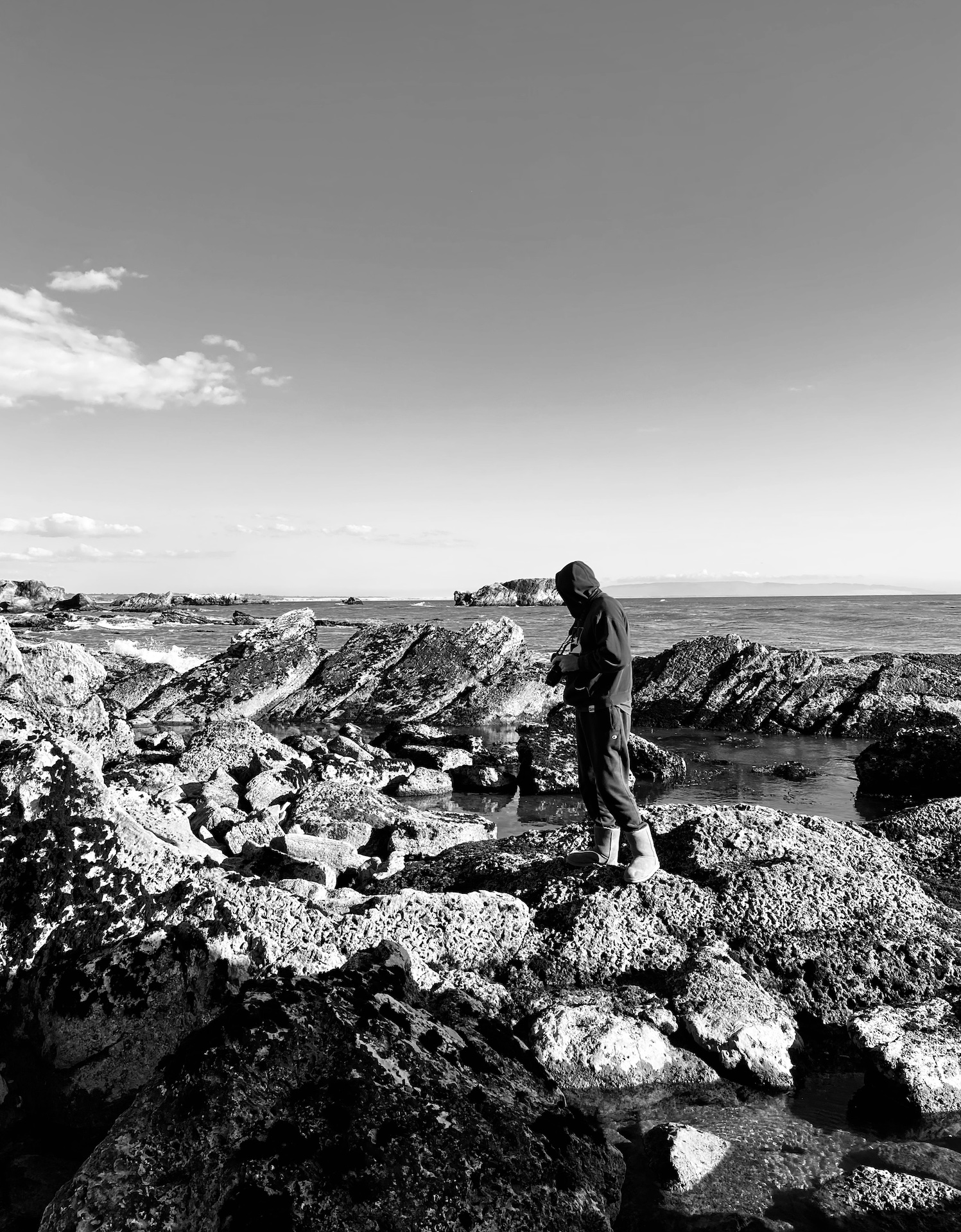
I’ve learned so, so much about the ocean, tides, rip currents, and spotting wild life from Wade. We’ve seen a lot in Northern California, Kaua’i, places we’ve travelled to, and now Central Coast.
We live near the beaches so it can be fun taking a walk during sunset and it’s also exciting to go out during low tides, especially negative low tides. Visiting beaches at this time can reveal the interesting marine life in tide pools.
Over a week ago, we had negative low tide near where we live in Central Coast, California. -0.173 at 3:47 PM in the afternoon. So that was exciting news.
We arrived at the beach around 5 PM and with sunset around 7:30 PM, we had plenty of time to explore. With a number of accessible beaches at Shell Beach, a community in Pismo, we went to the one near Eldwayen Ocean Park. The stairs are off Ocean Boulevard, near Morro Avenue.
Wade and I weren’t the only ones with this idea. We brought our cameras, including a macro lens which Wade used to capture what he saw. I also had my iPhone.
Sea Anemones
Sea anemones are fascinating and so captivating to look at. Related to jellyfish and coral, sea anemones is always a highlight. The way the sunlight highlights their venomous tentacles. They’re carnivorous and feed on plankton and small fish, the clownfish being immune to their stinging cells. These two have a symbiotic relationship.
With their cheerful colours and radial symmetry, sea anemones are the exotic flowers of the tide pools.
Marni Fylling, Fylling’s Illustrated Guide to Pacific Coast Tide Pools
The sea anemones we saw are pretty small though I read that some can grow up to 6.5 feet. I couldn’t find much about what species we have here on the Central Coast. We did have to be careful where we stepped look at the tidepools, the tiny sea life exposed to us. We saw black turban snails and green sea anemones (many may be disguised as a bundle of pebbles when they close up). Next time, I’ll put iNaturalist on my phone first.


Fylling’s Illustrated Guide to Pacific Coast Tide Pools
This is a beautifully-illustrated guidebook that includes helpful information shared with humour and delicious visual descriptions. I’ve been enjoying reading about the many creatures we can meet in tide pools.
Low tide is also a great time to collect seaweed for art-making, such as pressing them. Some kinds of seaweed work better. Bring a bucket and fill it with some seawater for your collection. Look for free floating ones in the tidepools. Choose a variety to experiment with.
When you’re back, gently clean the pieces first in the seawater then in clean filtered water. Remove any dirt and sand. I fill up the kitchen sink for this. Then fill a glass tray with clean filtered water and place in one piece of seaweed, allowing it to expand and unfold into its natural pattern. In the meantime, I’m soaking a piece of thick watercolour paper. When you are ready, move the paper beneath the seaweed and slowly lift it up so not to disturb it. You’ll want to layer them between paper and towel. Then place weight on top, such as heavy books. Check and replace the paper over the next few days. Depending on the thickness of the seaweed, pressing can take several weeks.


